Larry Fink’s BlackRock (NYSE: BLK) is trying to buy at least $5 billion of SpaceX stock before the rocket company starts trading as soon as tomorrow, putting one of Wall Street’s biggest money managers right in the middle of the IPO frenzy. Before SpaceX, the largest IPO of the year belonged to the chip-maker Cerebras, whose IPO fetched $5.55 billion. Therefore, yes, the BlackRock request for an enormous block can be compared with the largest IPO of the year. But while such demands from big money players are typical for popular IPOs, the scale you mentioned is definitely not standard for an IPO. BlackRock joins major funds as SpaceX sells every available IPO share Thursday afternoon, SpaceX announced that it had successfully sold out the maximum 555,555,555 shares, with each share valued at $135, giving the company an approximate valuation of $1.77 trillion. SpaceX was asked for more than $70 billion worth of SpaceX stock by retail investors. Even that demand alone would have been massive for any IPO process. One family office asked for more than $1 billion in shares. That single private-money order would already be headline material in a normal IPO. Here, it is only one part of the pile. Wednesday was the cutoff date for orders. SpaceX’s bankers will determine which individuals or organizations qualify for stock and the quantities they will buy prior to trading opening. In highly oversubscribed IPOs, investors typically request more stock than they hope to get allocated, as allocation cuts are commonplace in instances where there are a large number of buyers but insufficient stock. Elon Musk has wished for retail investors to purchase a larger percentage of the stock issued during a major IPO than is common practice. He has lobbied for approximately 30% of SpaceX stock to go to retail investors. But the actual IPO process itself has certainly been typical of Elon. SpaceX chose not to employ the price range method used by most banks, where they gauge investor interest to arrive at the appropriate price of the share. Instead, Elon offered a take-it-or-leave-it pricing of $135, though this hasn’t reduced interest in the IPO. However, it certainly hasn’t reduced questions regarding Elon’s grip on SpaceX even after the IPO, a factor that has become quite relevant as corporate governance experts are worried. Traders price SpaceX for a possible run into the $2 trillion club The traders in Polymarket are placing bets on the landing destination of SpaceX after the trading period ends. They assign an 84% probability that SpaceX will have exceeded a market cap of $1.8 trillion. Their probability of it exceeding $2 trillion is 69%. Their chances drop to below zero if the market cap is set at $2.2 trillion. SpaceX would be on par with just five other companies in the USA: Nvidia (NASDAQ: NVDA), Apple (NASDAQ: AAPL), Alphabet (NASDAQ: GOOGL), Microsoft (NASDAQ: MSFT), and Amazon (NASDAQ: AMZN). Valued at $2 trillion, it would also be ahead of Broadcom (NASDAQ: AVGO), which currently sits around $1.85 trillion. At the valuation of $1.77 trillion, SpaceX will even beat Tesla (NASDAQ: TSLA), whose valuation stands at $1.72 trillion. The risks associated with its government operations are also detailed in SpaceX’s filing. SpaceX will need to navigate various aspects such as federal procurement, cybersecurity, ethical issues, and national security considerations. As SpaceX’s role in the United States’ launches, satellites, and communication grows, these risks are likely to become greater. Don’t just read crypto news. Understand it. Subscribe to our newsletter. It's free .
LIVE
BTC
$63342.78
+3.05%
ETH
$1671.32
+3.11%
USDT
$0.9991
-0.01%
BNB
$602.70
+2.83%
USDC
$0.9998
-0.01%
XRP
$1.14
+4.01%
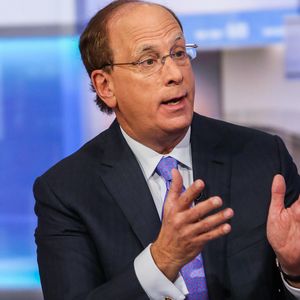
BlackRock is seeking at least $5 billion of SpaceX shares before the IPO
Cryptopolitan
1 hour ago
BUSINESS|MARKET|TRADING|CRYPTOCURRENCY
Related Articles

AVAX|REGULATION|DIGITAL ASSET TREASURY|MACROECONOMICS|CRYPTOCURRENCY
Scaramucci-backed AVAX One brings Avalanche treasury to Nasd...
Read More
BTC|EXCHANGE|MARKET|REGULATION|CRYPTOCURRENCY
Poland's crypto bill faces third presidential veto as parlia...
Read More
BUSINESS|EXCHANGE|FIAT|MARKET|TRADING
SpaceX prices IPO at $135 per share in preparation for recor...
Read MoreMarket Overview

BTC
Bitcoin
$63342.78
+3.05%

ETH
Ethereum
$1671.32
+3.11%

USDT
Tether
$0.9991
-0.01%

BNB
BNB
$602.70
+2.83%

USDC
USDC
$0.9998
-0.01%