China has approved Alibaba, Tencent and ByteDance to purchase Nvidia H200 AI chips, marking a cautious policy shift as Beijing weighs AI demand against domestic semiconductor goals. The expansion of data centers and the pace at which generative AI will develop within China is related to several key factors – Nvidia H200, Alibaba and Tencent, as well as the Chinese government’s policy and its balance. Nvidia H200 imports remain limited Regulators granted approvals to major technology companies, including Alibaba or Tencent to import nearly 421,000 Nvidia H200 chips through a successful acquisition process. It comes after Cryptopolitan reported that China has told its biggest tech companies to get ready to place orders for Nvidia H200 AI chips, a step that points to an approval decision getting close. Alibaba, Tencent, and ByteDance were informed that they can move ahead with preparation work tied to these purchases. According to industry sources, these approvals were secured as part of CEO Jensen Huang’s recent trip to China, but negotiations continue between the various government entities involved concerning some additional conditions about the purchase of Nvidia chips. Moreover, sources indicate that the licensing terms associated with the commercial licence will be quite restrictive, thus greatly hampering the time between receiving approvals and actually placing orders for the product. An analyst with a semiconductor industry consulting company in Beijing stated that the manner and timing of these approval processes were pragmatic. Therefore, according to the analyst, the ability to obtain approval for purchases is a means of “permitting” companies to access a limited quantity of computer chip products without necessarily providing them a “free pass”. Attempt to balance AI expansion with domestic chips Adding to the Chinese government policy, government officials have repeatedly requested that technology companies limit the purchase of foreign chip products to what they require. Nvidia Corp.’s suppliers had halted production of the company’s H200 AI accelerator after China moved to block shipments of advanced chips, dealing another blow to the US chipmaker’s access to one of its largest markets. There is also discussion regarding the use of H200 chips as part of the approval process, whereby companies will be required to purchase a certain amount of domestically produced chips when they import foreign-produced chips thereby supporting the establishment of local supply chains. Huawei and its fellow competitors produce comparable chips to the H20 chip made by Nvidia; however, none of the chips produced by Huawei or other competitors come close to meeting the specifications or processing power capabilities provided with H200. The difference between the available AI processing capabilities of the H200 chip as compared to the H20 chip is likely the reason that numerous orders from the largest internet companies in China for the H200 chip significantly exceed Nvidia’s supply of H200 chips. “Beijing’s approval of the H200 is driven by purely strategic motives,” said Alex Capri, a senior lecturer at National University of Singapore’s business school. “Ultimately, this decision is taken to further China’s indigenous capabilities and, by extension, the competitive capabilities of China tech.” Capri. Major platforms that continuously use cutting-edge technology now demand an increasing number of approved chips to train large models using AI and to support large-scale AI services. A senior executive from one of China’s leading cloud providers stated that approval of the chips will allow domestic manufacturers in China time to develop their respective advanced semiconductor products. Claim your free seat in an exclusive crypto trading community - limited to 1,000 members.
LIVE
BTC
$88841.00
+0.84%
ETH
$2988.15
+2.30%
USDT
$0.9990
-0.01%
BNB
$901.66
+2.03%
XRP
$1.91
+0.79%
SOL
$126.60
+2.12%
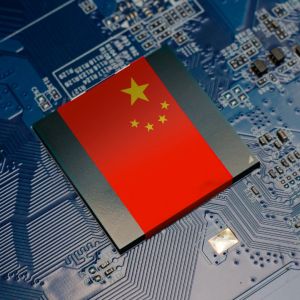
China clears limited Nvidia H200 purchases for top internet groups
Cryptopolitan
1 hour ago
ASIA|BUSINESS|MARKET|TECHNOLOGY|CRYPTOCURRENCY
Related Articles
EXCHANGE|FIAT|MARKET|MACROECONOMICS|CRYPTOCURRENCY
Kalshi forecasts match Wall Street accuracy on interest rate...
Read More
BUSINESS|MARKET|TECHNOLOGY|TRADING|RESEARCH
PwC survey shows majority of executives report no financial ...
Read More
EXCHANGE|TRADING|BNB|TOKEN LISTING AND DELISTING|CRYPTOCURRENCY
Changpeng Zhao defends Binance listings amid criticism over ...
Read MoreMarket Overview

BTC
Bitcoin
$88841.00
+0.84%

ETH
Ethereum
$2988.15
+2.30%

USDT
Tether
$0.9990
-0.01%

BNB
BNB
$901.66
+2.03%

XRP
XRP
$1.91
+0.79%