China’s p ower grid expenditures hit an unprecedented high last year, reflecting Beijing’s proactive measures to minimize transmission issues. This spending comes as the country’s economy and energy system continue to expand and adapt to rising demand and the global energy transition. The news was made public after a report from the China Electricity Council noted that grid investment rose by 639.5 billion yuan, or about $92 billion, indicating a 5% increase in 2025. Analysts say this record investment is not simply cyclical, but a strategic response to evolving demands on China’s power system . Rapid growth in renewable energy capacity, increased electricity consumption from emerging technologies like artificial intelligence (AI) data centers, has collectively stressed the existing grid. Contrastingly, reports from reliable sources revealed that investment in new power generation capacity has been insufficient due to a decline in solar deployment, citing official 11-month data. China allocates significant investments in its power grid amid increased AI adoption State Grid Corp. of China and China Southern Power Grid Co., two primary state-owned, monopolistic electric utility giants, have demonstrated sustained spending growth over the past few years. Collectively, their budgets are expected to reach nearly 1 trillion yuan this year and to maintain this growth trajectory through the end of the decade. With this financial commitmen t in place, sources affirm that Beijing will ultimately succeed in its grid expansion efforts. Regarding this plan, reports highlighted that the nation aims to connect over 420 gigawatts of capacity by 2030 as part of the West-to-East power delivery project. Moreover, this finding is expected to support the development of smart mini-grids and distribution networks capable of integrating approximately 900 gigawatts of power from smaller, distributed sources. Currently, China has 45 ultra-high-voltage (UHV) projects in operation. To support the nation’s power supply, policymakers are accelerating infrastructure development to meet the surging power demand driven by AI. Analysts weighed in on this move, noting that it may lead to the approval of an additional seven to nine initiatives this year. Notably, brokerage Galaxy Securities Co., a major Chinese state-owned integrated financial services provider, initially reported this information. So far, this expansion has proven advantageous for local electrical equipment manufacturers throughout the current global supply crisis for critical grid infrastructure. On the other hand, AI data center expansion has driven increased interest in this sector’s stocks. China’s State Grid shifts its focus towards improving the country’s power grid Last month, the state-run Xinhua news agency reported that China’s State Grid, the world’s largest public utility, intends to allocate around 4 trillion yuan (about $574 billion) over the next four years to enhance the nation’s power grid. This figure reflects a 40% growth in fixed-asset investments compared to the preceding five-year period. Notably, the announcement regarding China’s State Grid plans comes at a time when the country China is aggressively scaling its wind and solar capacity to meet its target of peaking carbon emissions before 2030. This investment strategy averages 800 billion yuan annually, exceeding the national grid operator’s record 2025 investment of 650 billion yuan. In a statement, Xinhua announced that the funds will be used to boost China’s power transmission network, which transports electricity from the sparsely populated west to the densely populated east via high-voltage power lines. Meanwhile, sources noted that State Grid seeks to increase inter-provincial and inter-regional electricity transmission capacity by 30% above 2025 levels. In addition, they mentioned that these investments will play a key role in expanding distribution networks in both urban and rural areas and in examining off-grid and microgrid energy generation methods. Don’t just read crypto news. Understand it. Subscribe to our newsletter. It's free .
LIVE
BTC
$78937.14
+2.65%
ETH
$2325.24
+3.33%
USDT
$0.9994
-0.06%
BNB
$780.50
+2.90%
XRP
$1.63
+2.11%
USDC
$0.9999
-0.08%
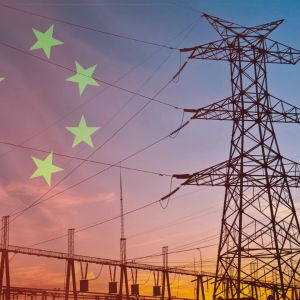
China makes record $92B outlay into power grid in 2025
Cryptopolitan
2 hours ago
ASIA|BLOCKCHAIN|TRADING|CRYPTOCURRENCY
Related Articles

BUSINESS|REGULATION|TRADING|CRYPTOCURRENCY
Spain moves to ban social media use for children under 16
Read More
ASIA|BLOCKCHAIN|BUSINESS|MARKET|TRADING
Major firms redirect focus as South Korea formally legalizes...
Read More
ALTCOIN|BLOCKCHAIN|BUSINESS|ICO|LINK
Chainlink price prediction 2026-2032: A strong buy sentiment...
Read MoreMarket Overview

BTC
Bitcoin
$78937.14
+2.65%

ETH
Ethereum
$2325.24
+3.33%

USDT
Tether
$0.9994
-0.06%

BNB
BNB
$780.50
+2.90%

XRP
XRP
$1.63
+2.11%