China’s top market regulator has fined several firms for impersonating ChatGPT and DeepSeek services, as Beijing tightens oversight in the country’s artificial intelligence sector. The State Administration for Market Regulation said Friday it punished several companies for unfair competition, falsely imitating and advertising AI services from other brands. According to the South China Morning Post, one of the fined companies is Shanghai Shangyun Internet Technology, which was found running a sham ChatGPT service through Tencent’s WeChat platform. The regulator fined the company 62,692.70 yuan, equivalent to about $9,034. The agency claimed the service had been advertising itself as the “official Chinese version of OpenAI’s ChatGPT,” and charged users for AI conversations, a conduct that breached the country’s Anti-Unfair Competition Law. “The company was fully aware of the industry status and influence of OpenAI’s ChatGPT. They deliberately created a false impression that they are providing the official service to mislead users into making purchases,” it said during a press briefing on Friday. AI companies fined for imitating ChatGPT and DeepSeek According to the AI Market Regulation government arm, a wave of DeepSeek mini-programmes and websites imitating the original platform appeared in early 2025. The watchdog penalized the services for trademark violations and for trying to deceive the public through falsified promotional language. “This investigation served as a deterrent to illegal operators … and guided the AI market towards a standardised and orderly path of development,” the agency said. Another firm, Hangzhou Boheng Culture Media, was fined 30,000 yuan for running an unauthorized website that allegedly offered “DeepSeek local deployment.” The regulator said the site copied fonts, icons, and layout from DeepSeek’s official platform and tricked users into paying for the service. In the regulator’s campaign roundup, an engineer was slapped with a 360,000 yuan penalty for illegally accessing company servers that held confidential code and algorithm data. Furthermore, a Shanghai firm received a 200,000 yuan penalty for building AI phone-call software used by loan agencies to carry out scams. A Beijing-based company was also fined 5,000 yuan for “freeriding” on DeepSeek’s name to promote its own local deployment software. Chinese race for top AI model heats up China’s innovation regulators have been trying to balance out the growth of AI companies and fair competition in a market where developers are aggressively competing to topple American entities. Just over a year ago, DeepSeek became the talk of the globe after it launched a chatbot with lower user fees and development costs compared to OpenAI’s ChatGPT. The launch took DeepSeek to the top of Apple Store downloads for almost a week. Beijing-based startup Moonshot AI introduced an update, Kimi K2.5, at the end of last month. The company said the model features video generation and agent-style capabilities that outperform three leading US systems. In the same week, Alibaba debuted a new generative model capable of producing text, images, and video from user prompts. The company said its Qwen3-Max-Thinking system was ahead of US competitors ChatGPT and Grok in a benchmark known as “Humanity’s Last Exam.” On January 19, Z.ai rolled out a free version of its GLM 4.7 model, but had to restrict new sign-ups for the coding tool after demand strained its computing capacity. Many Chinese-developed models are open-sourced, allowing users to modify code and build customized applications. “The hope is countries apart from China will use these models to ensure large amounts of applications are built on these Chinese models,” said Alex Lu, founder of LSY Consulting. “That’s one way for Chinese companies to penetrate the market.” Alibaba updated its Qwen app in early January so users can shop, order food, and pay within the chatbot interface through connections to platforms such as Taobao. On Friday, the online marketplace added bubble tea to its beverage list, which lifted the app from 10th place to the top spot in China’s Apple App Store, overtaking Tencent’s Yuanbao within hours. The Qwen team said more than 10 million free orders worth 250 million yuan, or about $36 million, were placed within nine hours using vouchers capped at 25 yuan. The rush briefly overwhelmed shops, according to posts from store owners on WeChat. Get seen where it counts. Advertise in Cryptopolitan Research and reach crypto’s sharpest investors and builders.
LIVE
BTC
$69146.15
+2.75%
ETH
$2044.25
+4.87%
USDT
$0.9992
-0.01%
BNB
$638.54
-0.75%
XRP
$1.41
-1.37%
USDC
$1.0000
-0.01%
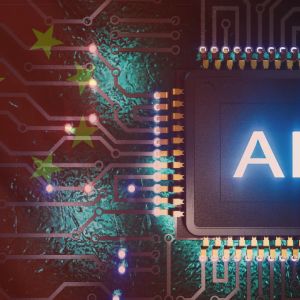
China’s market regulator fines firms impersonating ChatGPT and DeepSeek services
Cryptopolitan
1 hour ago
ASIA|BUSINESS|MARKET|REGULATION|TECHNOLOGY
Related Articles
ASIA|BUSINESS|FIAT|MARKET|TRADING
Apple rides iPhone 17 ‘Hermès orange’ craze to major China c...
Read More
BTC|BUSINESS|MARKET|TRADING|CRYPTOCURRENCY
Bitcoin Price Outlook: Will BTC Recover As Price Plunges? Wh...
Read More
BTC|BUSINESS|MARKET|REGULATION|CRYPTOCURRENCY
Questions grow about crypto eligibility in 401(k)s after lat...
Read MoreMarket Overview

BTC
Bitcoin
$69146.15
+2.75%

ETH
Ethereum
$2044.25
+4.87%

USDT
Tether
$0.9992
-0.01%

BNB
BNB
$638.54
-0.75%

XRP
XRP
$1.41
-1.37%