Circle (CRCL) has managed to raise $222 million from a pre-sale of Arc, which is the token associated with its upcoming blockchain. The company already has a fully diluted network value of $3 billion. But the timing could not have been worse, considering Circle’s earnings for the first quarter were better than expected yet still fell short of projections. The CRCL has regardless surged by more than 4% on Monday after the Arc news and the earnings report, where it posted 21 cents in earnings per share, which was 3 cents above the estimate from analysts surveyed by LSEG. The company’s revenue came in at $694 million, below the expected $722 million. Circle brings major investors into Arc before the blockchain goes live Andreessen Horowitz led the Arc raise with $75 million, joined by BlackRock (BLK), Apollo Funds, Intercontinental Exchange (ICE), SBI Group (8473.T), Janus Henderson Investors (JHG), Standard Chartered Ventures, General Catalyst, Marshall Wace, ARK Invest, IDG Capital, Haun Ventures, and Bullish, the crypto exchange that owns CoinDesk. This makes Circle the first publicly traded company to run a token presale before its blockchain officially launches. Arc is the native token of the new network, and its first supply will total 10 billion tokens, with Circle keeping 25% of that amount that gives it a way to run validators, collect network fees, and earn staking income if Arc sees real usage. The biggest slice, 60%, is meant for developers, users, and other people or companies that build on the network, use it, or help support it. The remaining 15% will go into a long-term reserve. Jeremy Allaire, Circle’s CEO, told reporters on Monday that blockchain infrastructure is becoming as important as mobile operating systems and cloud platforms. “We want to build an operating system that has many, many stakeholders in it,” Jeremy said, adding that large companies would help run the infrastructure and take part in governance. Jeremy also said Circle is becoming “a broader internet platform company.” He said the company is entering the operating system business through a token-based, distributed network, while also getting into apps. Circle grows USDC revenue while higher costs drag down net income Circle’s reserve income surged to $653 million, reflecting an increase of 17% since last year. However, it was mainly driven by a surge in the average amount of USDC circulating. There was a 39% rise in the volume of USDC circulating, but unfortunately, the reserves’ ROI decreased by 66 basis points. The total additional revenue from subscriptions, transactions, and service fees was $21 million, increasing its total revenue to $42 million. Expenses were also on the rise, with a significant rise in distribution, transaction, and other expenses to $407 million, owing to higher distribution payments. Operating expenses were 76% higher than last year at $242 million, due to post-IPO stock compensation and associated payroll taxes. Operating costs for Circle adjusted up 32%, hitting $136 million due to an increase in product, distribution, and operating investments. Net income declined 15%, settling at $55 million owing to insufficient increases in revenue to offset increased stock-based payment expenses and additional costs. Adjusted EBITDA climbed 24%, reaching $151 million, aided by increased USDC supplies. Circle also unveiled Circle Agent Stack, a set of tools intended for developers and AI agents. Some products in the stack include Circle CLI, Agent Wallets, Agent Marketplace, and Nanopayments via Circle Gateway. Circle CLI equips developers and AI agents with a command-line interface to construct with Circle’s wallets, payments, and policy management. Nanopayments facilitates USDC transfers without fees down to $0.000001, designed specifically for quick machine-to-machine payments, according to Circle. Circle Skills adds more tools for autonomous software that needs payment rails. Nikhil Chandhok, Circle’s chief product and technology officer, said USDC is “internet-native, programmable, and always available.” He said the new products combine digital dollars, wallets, service discovery, machine-readable controls, and payment tools built for software. Don’t just read crypto news. Understand it. Subscribe to our newsletter. It's free .
LIVE
BTC
$81002.49
+0.18%
ETH
$2336.14
+0.48%
USDT
$0.9996
-0.01%
XRP
$1.45
+1.58%
BNB
$653.27
+0.39%
USDC
$0.9997
+0.00%
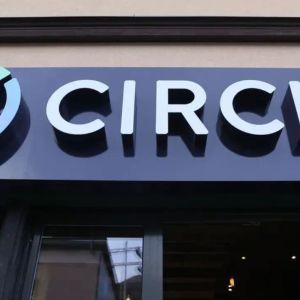
Circle misses Q1 estimates as Arc token project hits $3B valuation
Cryptopolitan
1 hour ago
BLOCKCHAIN|BUSINESS|TECHNOLOGY|USDC|CRYPTOCURRENCY



Market Overview

BTC
Bitcoin
$81002.49
+0.18%
ETH
Ethereum
$2336.14
+0.48%

USDT
Tether
$0.9996
-0.01%

XRP
XRP
$1.45
+1.58%

BNB
BNB
$653.27
+0.39%