El Salvador has finalized a new version of its bitcoin diploma program. According to the country’s National Bitcoin Office, “Bitcoin Diploma 2.0” will have the first printed copies available in the upcoming days. The new Bitcoin diploma program now uses teaching methods that make complex concepts easier for younger students. The printed copies will be used in the education system of the Central American country. Stacy Herbert, Director of the National Bitcoin Office, shared the news on X. She explained that Bitcoin Diploma 2.0 will be part of other educational initiatives, including the course “What is Money?”, CUBO+, and the Higher School of Innovation in Public Administration (ESIAP). She continued , “From 7 year old students studying, “What is Money?” to 80,000 adult civil servants receiving a 3-day certification program on bitcoin, the new El Salvador keeps building something extraordinary.” According to local media outlets, the Bitcoin diploma covers various topics, including mining, incentives, economics, and how the global financial system works. Moreover, it teaches students how to design their own money. BITCOIN DIPLOMA 2.0 A new era begins in the new El Salvador. 🇸🇻📙🚀 pic.twitter.com/MNFkpFXt0M — The Bitcoin Office (@bitcoinofficesv) February 22, 2026 What happened to El Salvador’s Bitcoin Diploma 1.0? The original Bitcoin Diploma was created together with Mi Primer Bitcoin, or My First Bitcoin, an El Salvadorian nonprofit. My First Bitcoin was focused solely on creating open-source Bitcoin educational materials. The first version of the Bitcoin Diploma was launched in El Salvador in June 2022. It was a pilot educational program available in public schools and offered a 10-week course that taught the basics of Bitcoin. In 2023, thousands of students across the country were graduating with the Bitcoin Diploma. Last year, the Ministry of Education announced that 350 female students finished the Bitcoin Diploma course. In total, My First Bitcoin educated over 27,000 Salvadoran students face-to-face about Bitcoin. However, last April, the collaboration between the nonprofit My First Bitcoin and the Central American country came to an end. Will El Salvador’s Bitcoin Diploma 2.0 succeed? El Salvador was the first country in the world to make Bitcoin legal tender. The government launched Chivo, a digital wallet that offered a $30 signup bonus to attract users. Businesses were required to accept BTC alongside the U.S. dollar. But the policy failed to take off as a widely used currency. Salvadorans rarely used Bitcoin for transactions. A survey conducted by three researchers found that only 20% of participants continued using Chivo after spending their $30 bonus. “The main driver of adoption for households is reported to be the $30 bonus, equivalent to 0.7% of annual income per capita,” wrote the researchers. According to another research paper by Emeritus Professor David Krause, the Chivo wallet experienced technical glitches and crashes. The paper added, “By 2024, despite government incentives like the $30 Chivo wallet sign-up bonus, 92% of Salvadorans still refrained from using Bitcoin in transactions.” Volcano Bonds were part of the country’s Bitcoin Strategy. El Salvador started drafting laws to issue $1 billion in “Volcano Bonds.” The funds would support Bukele’s Bitcoin City and national BTC purchases. But Volcano Bonds never materialized as originally planned, and investor appetite was limited. The Salvadoran government delayed the “Volcano Bonds” in March of 2022, and no further plans or updates have been released to the public. Another failed project is Bitcoin City, which was announced by Bukele in November 2021. The plan was to build the city near the Conchagua volcano and use geothermal energy for BTC mining. Despite passing the Bitcoin Law in El Salvador in 2021, Bitcoin City has faced delays in financing and construction. The project has also drawn criticism over its feasibility and environmental impact. Planned infrastructure, including a new airport linked to the city, threatens mangrove ecosystems, according to The Guardian. Moreover, locals were forced to relocate as land was cleared to make way for the project. Cryptopolitan reported that El Salvador has not purchased any Bitcoin since December 2024. A report from the International Monetary Fund (IMF) stated that the apparent rise in El Salvador’s BTC reserves resulted from internal transfers and wallet consolidations within government-controlled wallets. Specifically, BTC was moved between the Strategic Bitcoin Reserve Fund and the Chivo e-wallet. The success of Bitcoin Diploma 2.0 will become clearer as the program rolls out across the country’s education system. If you're reading this, you’re already ahead. Stay there with our newsletter .
LIVE
BTC
$68163.39
+6.36%
ETH
$2065.05
+11.45%
USDT
$1.00
+0.02%
XRP
$1.43
+6.09%
BNB
$629.37
+7.80%
USDC
$1.00
+0.01%
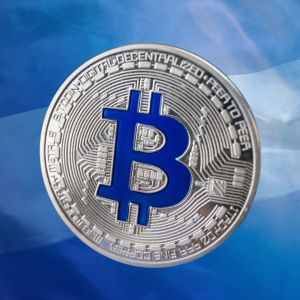
El Salvador expands Bitcoin education with Diploma 2.0, will it succeed?
Cryptopolitan
2 hours ago
BTC|BUSINESS|MINING|REGULATION|TRADING

Market Overview

BTC
Bitcoin
$68163.39
+6.36%

ETH
Ethereum
$2065.05
+11.45%

USDT
Tether
$1.00
+0.02%

XRP
XRP
$1.43
+6.09%

BNB
BNB
$629.37
+7.80%