A Federal Reserve governor went against the grain Monday, saying foreign firms actually pay for Trump’s tariffs instead of American consumers. Stephen Miran’s comments at Boston University clash with what most economists and researchers have found. Miran told the audience that accounting tricks hide who really pays. When data shows a U.S. company bearing the cost, he says it’s often just the American arm of a foreign business. “It’s entirely inappropriate to say that we can conclude from those data that U.S. agents are bearing the burden of the tariff, because some of those companies are actually subsidiaries of foreign companies,” he said. But Yale Budget Lab’s research from November tells a different story. The poorest families pay about $964 annually, while the richest pay $4,056, but lower-income households get hit three times harder as a share of what they earn. Yale calculated prices went up about 1.2% because of tariffs. The Tax Foundation went further, calling Trump’s tariffs “the largest U.S. tax increase as a percent of GDP since 1993.” Their data shows the average tariff rate jumped from around 2% in 2024 to roughly 10% in 2025, the highest level since 1946. The federal government collected $264 billion in tariff revenues in 2025, according to Tax Foundation research, far short of the trillions the White House regularly mentions. Grocery bills show real impact Grocery shelves tell the real story. Coffee prices went up 33.6%, ground beef rose 19.3%, romaine lettuce climbed 16.8%, and frozen orange juice increased 12.4%, based on Bureau of Labor Statistics data. These items got hit because they’re either not made domestically or grown abroad. Electronics, toys, and cars faced similar pressures. Amazon CEO Andy Jassy said last week that shoppers were seeing tariff costs show up in prices . Economist Paul Krugman figured tariffs added 0.8 percentage points to inflation in early February. The White House pushed back hard. “America’s average tariff rate has increased by nearly tenfold in the past year, while inflation has actually cooled, real wages have risen, GDP growth has accelerated, and trillions in investments continue pouring in to make and hire in America,” spokesman Kush Desai said. The most recent government numbers show annual inflation in December at 2.7%, about the same as when Trump took office. But Tax Foundation research found the tariffs will wipe out most economic gains from Trump’s new tax cuts that kicked in this year. That creates a situation where the administration gives with one hand through tax relief while taking back with the other through import taxes. Miran came to the Fed last year when Trump appointed him to fill an open seat. Before that, he was Trump’s top economic adviser. He even took a controversial leave from the White House while working at the central bank at the same time. His idea is that foreign sellers eat the tariff costs through weaker currencies instead of raising prices on Americans. Trump himself admitted late last year that Americans faced some higher prices, though he said the policy still helped overall. “I think that they might be paying something,” Trump said. Yale’s September numbers showed the typical household paying $2,000 a year in tariff costs. Cryptopolitan reported back in December that UBS warned Trump’s tariff approach would cause problems for the Fed’s 2% inflation goal. The bank said slowly adding more tariffs would make fighting inflation harder. This matters because the Fed has been saying tariffs pushed inflation above target this year. Fed Chair Jerome Powell said in January that tariffs probably cause a one-time price jump, not lasting inflation. Other Fed officials said the damage wasn’t as bad as expected. Former fed chairs join 50 economists against tariffs Miran’s stance creates friction at the Fed while the Supreme Court decides if Trump’s tariffs were even legal. Former Fed chairs Ben Bernanke and Janet Yellen got almost 50 economists together last October, asking the court to throw out most of the global tariffs. They called the tariffs economically pointless and legally shaky. What comes next depends on two things. First, the Supreme Court ruling on whether the tariffs are legal. Second, whether inflation numbers back up Miran’s claim that tariffs don’t hurt much. Jobs data already shows problems, as Cryptopolitan reported in September that manufacturers stopped hiring because tariff policy kept changing. Miran also said Monday that tariff money helps cut the federal deficit. But Yale’s research found that slower economic growth from tariffs actually reduces total tax revenue by $400 billion to $1 trillion over ten years, which eats into what tariffs bring in. Don’t just read crypto news. Understand it. Subscribe to our newsletter. It's free .
LIVE
BTC
$68622.11
-2.47%
ETH
$2007.93
-5.05%
USDT
$0.9995
-0.01%
XRP
$1.40
-3.38%
BNB
$616.60
-3.29%
USDC
$1.0000
-0.00%
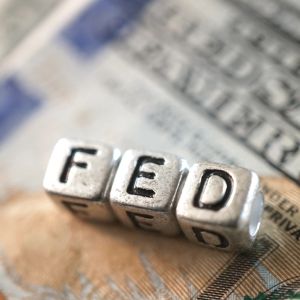
Fed Governor Stephen Miran claims foreign companies absorb tariff costs through weaker currencies
Cryptopolitan
1 hour ago
FIAT|MARKET|REGULATION|RESEARCH|MACROECONOMICS
Related Articles

BLOCKCHAIN|BUSINESS|MARKET|TRADING|CRYPTOCURRENCY
Bubblemaps links X contest winner to approximately $600,000 ...
Read More
BUSINESS|REGULATION|TECHNOLOGY|MACROECONOMICS|CRYPTOCURRENCY
Ford missed fourth quarter earnings badly, posting 13 cents ...
Read More
FIAT|MARKET|REGULATION|TRADING|MACROECONOMICS
Credit card balances hit $1.28 trillion in Q4 2025, up $44 b...
Read MoreMarket Overview

BTC
Bitcoin
$68622.11
-2.47%

ETH
Ethereum
$2007.93
-5.05%

USDT
Tether
$0.9995
-0.01%

XRP
XRP
$1.40
-3.38%

BNB
BNB
$616.60
-3.29%