Israel is losing close to $3 billion a week since fighting broke out with Iran, and markets are barely flinching. That figure comes from Israel’s Finance Ministry, which on Wednesday put the weekly damage at 9.4 billion shekels, or about $2.93 billion. The losses stem from “red” restrictions under Israel’s Home Front Command, rules that keep most workers home, close schools, and call up reservists. The ministry said the bulk of those losses kicks in from next week. To soften the hit, ministry officials asked the Home Front Command to drop down to “orange”, a looser set of rules that would cut the weekly loss roughly in half, to 4.3 billion shekels. Fighting started Saturday when the U.S. and Israel launched strikes on Iran. Iran hit back with attacks across Israel and the broader Middle East, and energy exports from the Gulf took a hit. Both U.S. and Israeli officials say the campaign could run for weeks. Israel’s economy was already carrying scars from the Gaza war with Hamas, yet it still grew 3.1% in 2025. After a ceasefire in October, growth above 5% for 2026 looked realistic. That picture has since changed. Markets shrug off the war for now Wednesday marked five days of war and three days of open trading. U.S. stocks were heading higher. The S&P 500 was set to open in the green, and the VIX, Wall Street’s fear gauge, was falling. A New York Times report appeared to be driving the mood. Iranian intelligence officials had reportedly passed word, through a third country’s spy service, to the CIA that they were open to talks. Israel has reportedly told Washington to ignore it. U.S. officials are reportedly not taking it seriously. Iran denied the report outright. According to the semi-official Tasnim news agency, a source from the Iranian intelligence ministry called it “absolute lies and psychological warfare in the midst of war”. Oil was not buying the optimism. Crude pushed past $82 a barrel Wednesday, even as Trump raised the idea of Navy escorts through the Strait of Hormuz. Goldman Sachs estimated oil flow through the strait at roughly 15% of normal. A Maltese container ship was struck by an unknown projectile in the Strait on Wednesday morning. At the pump, gas prices shot up overnight to $3.20 a gallon on average, from under $3 at the start of the week. The war kept spreading. Early Wednesday, Iran fired a ballistic missile that NATO intercepted over Turkey. Saudi Arabia’s Ras Tanura refinery, shut since drone attacks Monday, came under a second attempted strike. Iran’s death toll passed 1,000, including children. The funeral of Ayatollah Ali Khamenei was postponed because of Israeli threats. Asked Tuesday about who might lead Iran going forward, Trump told reporters that “Most of the people we had in mind are dead. Pretty soon we are not going to know anybody.” Iran has a population of 93 million. Israel’s own markets took an unexpected turn Israel’s own markets took an unexpected turn in the early days of the conflict. Rather than selling off, the Tel Aviv Stock Exchange rallied. The TA-35 rose 3.8% and the TA-125 gained roughly 4%. The shekel got stronger, not weaker. The dollar fell 2% locally to around 3.07 shekels, and the euro dropped 2.5% to 3.61 shekels, while globally, the dollar was climbing. The dollar index rose 0.7% to 98.2. The euro fell to around $1.17 internationally, and the British pound dipped below $1.34. JPMorgan Chase CEO Jamie Dimon, speaking on CNBC Monday, said the conflict probably would not drive up inflation or rattle the global economy, provided it wraps up quickly. “The economy is not often driven by something like that unless it is prolonged,” he said. “If it’s not prolonged, it’s not going to be a major inflationary hit.” He said he hoped the war might push the region toward a lasting settlement, though he flagged the risk of higher gas prices, cyberattacks, and terrorism. Goldman Sachs CEO David Solomon was less relaxed. He said he was “actually surprised” the market’s response had been “more benign” than expected. He warned it can take “a couple of weeks” before investors start pricing in the real damage. Claim your free seat in an exclusive crypto trading community - limited to 1,000 members.
LIVE
BTC
$72820.19
+6.60%
ETH
$2135.25
+7.66%
USDT
$1.00
-0.00%
BNB
$657.87
+3.78%
XRP
$1.43
+5.31%
USDC
$0.9999
-0.02%
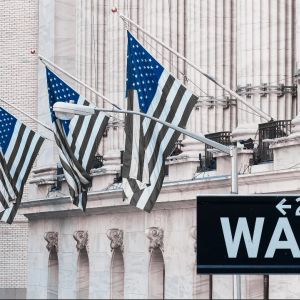
Israel is losing close to $3 billion a week since fighting broke out with Iran, and markets are barely flinching
Cryptopolitan
1 hour ago
BUSINESS|COMMODITY|EXCHANGE|MARKET|TRADING
Related Articles

BLOCKCHAIN|BUSINESS|ETH|EXCHANGE|ICO
Spell price prediction 2026-2032: Will SPELL recapture $0.01...
Read More
BLOCKCHAIN|BTC|BUSINESS|EXCHANGE|ICO
SUI price prediction 2026-2032: Is SUI a good investment?
Read More
BUSINESS|MARKET|TRADING|MX|CRYPTOCURRENCY
GMX is rallying after its DAO admitted two years of buybacks...
Read MoreMarket Overview

BTC
Bitcoin
$72820.19
+6.60%

ETH
Ethereum
$2135.25
+7.66%

USDT
Tether
$1.00
-0.00%

BNB
BNB
$657.87
+3.78%

XRP
XRP
$1.43
+5.31%