South Korea is fighting back against the flood of low-cost robots from China and Japan, which are handicapping its local makers. Officials of the Korea Trade Commission (KTC) said Thursday it will impose antidumping duties as much as 15.96-19.85% on Chinese robots and 17.45-18.64% on Japanese robots, citing damages to the local market. “We have conducted an investigation since May, including overseas on-site inspections and visits to domestic demand industries, and determined the level of antidumping duties based on our findings,” an official said . Why is Korea targeting China and Japan? The Korean trade watchdog began its probe into the matter following anti-dumping complaints filed by HD Hyundai Robotics and four others earlier last year. Therein, the South Korean firms accused Chinese and Japanese suppliers of selling vertically articulated industrial robots with four or more axes at unfairly low prices. An HD Hyundai official said they started suffering damages in the first half of 2024, with Chinese companies selling products nearly 60% cheaper than locally-made ones. “Chinese companies appear to be dumping their products into the Korean market to reduce their inventories amid the prolonged weakening of consumption in their own country,” the official said at the time. South Korea happens to be the fourth largest market for industrial robots, led by China, Japan, and the United States, according to a market insight by the International Federation of Robotics. South Korea follows China, Japan, and the US as the largest markets for industrial robots. Source: International Federation of Robotics As of 2024, Korea had 391,900 operational units. China alone accounted for 43% or 2,027,200 units, followed by Japan with 450,500 units, and the U.S. with 391,900 units. U.S. is also calling for tariffs on Chinese robots The U.S. robotics firms are also pushing for similar measures as Korea against Chinese products. Last year, U.S. robot makers, including Tesla, urged lawmakers to implement national strategies to bolster the domestic market and subsidize local robots, just as China does. While testifying to Congress last December, New York-based Standard Bots CEO Evan Beard complained that U.S. quotes are ten times higher than Chinese suppliers, which makes it difficult for U.S. suppliers to compete globally. Beard recommended the U.S. government increase funding, and also implement a ban or tariffs on industrial Chinese robots to create a “fair competitive landscape for American suppliers.” The Trump administration is expected to issue an executive order on robotics this year, but some U.S. robotics execs say there may not be any major policy push until President Trump meets with Chinese leader Xi Jinping – a meeting that was postponed due to the escalation of the US-Iran conflict. In other news, two U.S. lawmaker has put forward a bill to ban the government from buying or operating humanoid robots made by Chinese firms, saying they pose a national security risk, Cryptopolitan reported Thursday. If you're reading this, you’re already ahead. Stay there with our newsletter .
LIVE
BTC
$68742.32
-3.59%
ETH
$2060.21
-4.97%
USDT
$0.9994
-0.02%
BNB
$628.47
-2.92%
XRP
$1.36
-3.74%
USDC
$0.9999
+0.01%
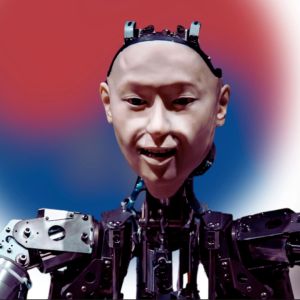
South Korea has decided to impose tariffs on Japanese and Chinese robots
Cryptopolitan
2 hours ago
ASIA|FIAT|MARKET|REGULATION|MACROECONOMICS
Related Articles

BLOCKCHAIN|ETH|EXCHANGE|MARKET|SHIB
Floki Inu price prediction 2026-2032: Can FLOKI surpass prev...
Read More
ALTCOIN|BLOCKCHAIN|BUSINESS|ICO|LINK
Chainlink price prediction 2026-2032: A strong buy sentiment...
Read More
BTC|EXCHANGE|MARKET|REGULATION|CRYPTOCURRENCY
Coinbase is pushing US lawmakers to reform crypto tax rules,...
Read MoreMarket Overview

BTC
Bitcoin
$68742.32
-3.59%

ETH
Ethereum
$2060.21
-4.97%

USDT
Tether
$0.9994
-0.02%

BNB
BNB
$628.47
-2.92%

XRP
XRP
$1.36
-3.74%