Tesla (NASDAQ: TSLA) fell 2% by the close as traders reacted to a new worry around Elon Musk: a possible SpaceX IPO could pull both money and attention away from Tesla. The stock has been the main public-market way to buy into Elon’s bigger business world, covering EVs, energy storage, software, AI, and robot plans. Now investors may soon have another door into that world, and that is where the headache starts. The issue is about how investors price Tesla if SpaceX becomes public. Some funds and retail buyers have held Tesla partly because it was the cleanest listed bet tied to Elon. If SpaceX lists, those same buyers may split their money. Some may want rockets, satellites, and space systems instead of cars, batteries, and robotaxis. That can hit Tesla trading volume, fund flows, analyst models, and the story Wall Street uses to value TSLA. Investors ask if SpaceX will take cash away from Tesla If SpaceX launches an IPO, the math for Tesla will change, as the stock won’t be considered the only Musk play by the market anymore. This is important for a stock that tends to trade not only based on the performance of the automotive business but also because of expectations related to Tesla as a leader in electric vehicles, Full Self-Driving, robotaxis, humanoid robots, energy storage, and Elon’s ability to make difficult technologies profitable. In case SpaceX goes public, investors will have another Musk venture to consider, which means that a basic question needs to be addressed: how much of the risks related to Elon Musk does one’s portfolio need to take? For current Tesla shareholders, there’s another problem to consider. The launch of SpaceX with a high valuation could result in a portion of capital flowing into the new listing rather than the existing stock. Additionally, funds may reevaluate the level of exposure to the same person across two industries, and this may impact the way Tesla is analyzed, particularly if experts begin to distinguish the Musk premium from the actual performance. Another factor is attention. Tesla already has a lot to do with its Full Self-Driving, robotaxis, humanoid robots, manufacturing electric vehicles, battery storage, and selling energy products. In addition, SpaceX also has ambitious plans. Thus, the question arises of whether Elon is able to run both companies successfully after SpaceX becomes publicly traded. There could also be some intersections between the two companies, as they can collaborate in such areas as satellite internet, self-driving technology, energy storage, and software. BYD adds pressure as Tesla faces a harder EV market The second key issue for Tesla to consider is BYD Company (HKEX: 1211, OTCMKTS: BYDDY). The Chinese manufacturer shipped 135,098 cars in April 2026. All of the units exported by BYD were either battery-electric vehicles or plug-in hybrids. This is important because analysts estimate Tesla’s monthly delivery rate at around 119,000 cars based on Q1 2026 figures. As Tesla does not provide such figures themselves, analysts determine the monthly rate based on quarterly performance. In practice, Tesla’s monthly delivery rate in April 2026 might have been even lower, since the company tends to push deliveries to the end of each quarter. Despite all the tariffs and political opposition, BYD still faces difficulties selling its cars in the U.S. market. However, the company is actively developing other markets, and its export numbers for April 2026 show that it enjoys considerable success outside of China. The export numbers for BYD were even higher than the 135,098 cars mentioned above – BYD delivered a total of 314,100 passenger vehicles globally in April 2026. Out of these units, 179,000 were sold in China, while the rest were exported. The domestic sales matter because China is the world’s largest car market and one of the most competitive in terms of EV sales. For Tesla, this means that the competition is not limited to US demand and price cuts. Now the company faces a competitor who delivers not only battery-electric cars but also plug-in hybrids on an industrial scale. If you're reading this, you’re already ahead. Stay there with our newsletter .
LIVE
BTC
$76703.34
-0.42%
ETH
$2105.45
-1.35%
USDT
$0.9993
-0.01%
BNB
$638.40
-0.95%
XRP
$1.36
-2.55%
USDC
$0.9999
+0.01%
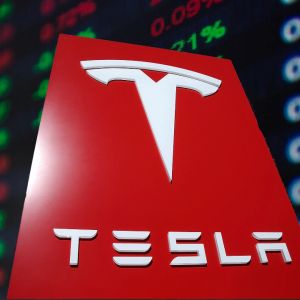
Tesla fell 2% as investors worried a SpaceX IPO could pull money and attention away from the company
Cryptopolitan
1 hour ago
ASIA|BUSINESS|MARKET|TECHNOLOGY|TRADING
Related Articles
EXCHANGE|FIAT|REGULATION|MACROECONOMICS|CRYPTOCURRENCY
Sen. Warren launches a probe into the OCC, accusing the Trum...
Read More
BLOCKCHAIN|BUSINESS|MINING|SOL|CRYPTOCURRENCY
X ‘cop’ unveils active user dashboard in content optimizatio...
Read More
ASIA|BLOCKCHAIN|DIGITAL ASSET TREASURY|MACROECONOMICS|CRYPTOCURRENCY
US froze nearly $500 million in Iranian crypto under the Eco...
Read MoreMarket Overview

BTC
Bitcoin
$76703.34
-0.42%
ETH
Ethereum
$2105.45
-1.35%

USDT
Tether
$0.9993
-0.01%

BNB
BNB
$638.40
-0.95%

XRP
XRP
$1.36
-2.55%