The New York Times is stirring the pot with an investigation it published today May 24, claiming that Trump appointees at the Commodity Futures Trading Commission (CFTC) probed and placed officials, including senior staff, who did not fall in line with its plans for prediction markets on administrative leave. Career officials had flagged problems with three firms: Polymarket, Crypto.com, and an affiliate of Gemini, and according to the NYT, those companies’ ties to the Trump family might have been what led to trouble for them. The concerns that the ousted staff members raised were different for each firm. Did Crypto.com treat small bettors fairly? Did Polymarket have sufficient fraud protections? Did Gemini’s affiliate complete mandatory regulatory review before being allowed to operate? Caroline Pham, who served as acting CFTC chair at the time and her senior counsel, reportedly stepped in on behalf of the companies, helping them obtain favorable outcomes over the objections of agency staff, the New York Times claimed, citing sources. How is the Trump CFTC dealing with crypto and prediction market firms? Citing comments from current and former agency employees, the Times said that everyone at the CFTC quickly got the message that the acting Trump appointee meant to send: raising concerns about politically connected firms would carry consequences. Two officials who raised questions about the firms mentioned in the Times report were reportedly placed on administrative leave and were facing internal investigations by the end of 2025. Another three staffers who were working on crypto enforcement cases faced the same treatment. None received an explanation for the disciplinary action, the investigation found . Trump came into the office with the promise of dialing back enforcement that markets, especially frontier sectors such as crypto and prediction markets, deemed unfair during the Biden administration. From when Pham was in an acting role at the CFTC to now that Michael Selig has been confirmed, the agency has dropped at least five crypto-related investigations. The frequency of filing enforcement actions targeting crypto has also dropped drastically, going from more than 80 during the Biden era to just two under Trump. Trump appointees are leaving CFTC for industry roles Several key figures have landed roles at companies under their oversight immediately after leaving their roles. As Cryptopolitan reported in August 2025, Bo Hines got a job as Tether’s Strategic Advisor for Digital Assets and U.S. Strategy after he left his role as the White House Crypto Council executive director . Pham left the CFTC to join MoonPay, a crypto company partnered with Polymarket. Her senior counsel, Brigitte Weyls, became general counsel at Gemini Titan, the same entity whose application she had helped approve. The current CFTC chair, Michael Selig, previously worked as a corporate lawyer representing crypto firms. He is now the agency’s sole commissioner. The NYT also raised eyebrows over the financial connections between the three companies at the center of the investigation and the Trump family. Crypto.com is a business partner of Trump Media. Donald Trump Jr.’s venture capital firm, 1789 Capital, invested in Polymarket. The founders of Gemini are financial backers of American Bitcoin Corp, a company co-founded by Eric Trump. White House spokesman Davis Ingle rejected any suggestion of impropriety. “President Trump only acts in the best interests of the American public,” Ingle told the Times. “There are no conflicts of interest.” Trump’s CFTC now fighting states over prediction markets The investigation lands as the CFTC under Selig has aggressively expanded its legal campaign to protect prediction markets from state regulation. The agency has filed lawsuits against Wisconsin, Minnesota, New York, Arizona, Connecticut, and Illinois over their efforts to restrict or ban platforms like Kalshi and Polymarket, according to CFTC press releases. Minnesota became the first state to fully ban prediction markets when Governor Tim Walz signed legislation on May 19. The CFTC sued the next day, seeking a preliminary injunction before the law takes effect on August 1. “This Minnesota law turns lawful operators and participants in prediction markets into felons overnight,” Selig said in the CFTC’s announcement . Minnesota Attorney General Keith Ellison pushed back, telling Salon that “prediction markets are designed to be addictive and prey especially on young people and low-income folks.” The prediction market industry has grown rapidly with the regulatory green flags waved by the Trump admin. Monthly trading volume has gone from roughly $792 million in January 2025 to close to $12.5 billion in January of this year, according to Defillama data . Prediction volume has exploded under the Trump admin’s stewardship. Source: Defillama The NYT findings raise questions about whether the same agency now fighting to protect prediction markets from state oversight was reshaped specifically to serve the interests of firms with ties to the president’s family. Don’t just read crypto news. Understand it. Subscribe to our newsletter. It's free .
LIVE
BTC
$76870.72
+3.06%
ETH
$2118.58
+4.60%
USDT
$0.9995
+0.04%
BNB
$659.03
+3.28%
XRP
$1.36
+3.73%
USDC
$1.00
+0.05%
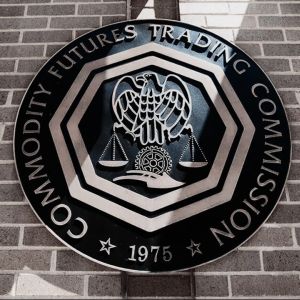
Trump administration suspended CFTC officials who challenged prediction market firms, NYT reports
Cryptopolitan
1 hour ago
MARKET|REGULATION|SPONSORED|CRO|CRYPTOCURRENCY


Market Overview

BTC
Bitcoin
$76870.72
+3.06%

ETH
Ethereum
$2118.58
+4.60%

USDT
Tether
$0.9995
+0.04%

BNB
BNB
$659.03
+3.28%

XRP
XRP
$1.36
+3.73%