A casino feels trustworthy right up to the day it will not pay. That is the day the trust model behind it actually matters, and most players never think about it until they are already stuck. Web3 casino trust comes in two forms that people often confuse. One is a regulator's license. The other is the math of self-custody and on-chain settlement. They protect against different failures, and knowing which covers what, the difference between recovering a stuck payout and writing it off. Trust Is Only Tested When Something Goes Wrong Most advice about choosing a casino focuses on the moment before you play, the license seal, the game count, and the welcome bonus. The harder question is what recourse you actually have after a problem appears. Three failures put a platform's trust model to the test: a withheld withdrawal, a disputed bet, and an operator that goes under. Each one exposes a different gap, and the two trust models answer them in very different ways. Understanding that is the real measure of whether web3 casinos are safe for your money. Failure One: The Withheld or Delayed Withdrawal This is the everyday failure. You win, you request a payout, and it stalls. The balance shows as yours, but the money does not move. The problem is documented across the industry. Crypto sportsbook Nitrobetting drew complaints in 2024 from users reporting payout delays of more than 46 days, with support offering no completion timeline, around the time of a reported ownership change. Delays often cluster after a large win or a quiet change in account terms. A license gives you a path here. You file a formal complaint, the operator has a set window to respond, and you escalate to the regulator or an alternative dispute resolution provider if it fails. Self-custody changes the picture entirely, because on a non-custodial platform, there is no operator-held balance to withhold in the first place. A web3 casino won't pay problem cannot start where the casino never holds your funds. Failure Two: The Disputed Bet The second failure is a result you believe was wrong, or a game you suspect was not fair. Here, the two models diverge sharply on what proof you can bring. A license gives you the authority that can audit the game's random number generator and adjudicate the dispute on your behalf. The catch is that you are trusting a regulator to investigate and rule, which takes time and depends on the jurisdiction's diligence. Verifiability gives you something stronger. With provably fair games, you recompute the outcome yourself from the published seed, and on-chain bet records sit as immutable evidence that no one can quietly edit. You do not need to be believed, because you can prove the result. A crypto casino withdrawal dispute over a verifiable game is settled by math, not by argument. Failure Three: Insolvency or the Exit Scam The worst failure is an operator who goes under or vanishes overnight, taking custody-held balances with it. This is where most trust models break down completely. Here is the honest truth: a license offers limited protection unless player-fund segregation is specifically mandated and enforced, which many jurisdictions do not require. An exit scam is worse still. Because crypto transactions are irreversible and many operators stay pseudonymous, a vanished casino is almost impossible to pursue. Self-custody is the one protection that holds up. Funds that never sat in the operator's wallet cannot disappear with it. Against crypto casino insolvency, keeping your balance in your own custody is worth more than any promise printed in the terms. What Each Trust Model Actually Protects The two models are not competitors so much as coverage for different risks. The table sets out what each one gives you at the three failure points. Failure What licensing gives you What self-custody and on-chain give you Withheld withdrawal Complaints process, regulator, or ADR escalation No operator balance to withhold Disputed bet The regulator can audit and adjudicate Recompute the result yourself, immutable on-chain proof Insolvency or exit scam Limited, unless fund segregation is enforced Funds are never held by the operator A clear pattern emerges. Licensing helps when an operator misbehaves but still exists and answers to someone. Self-custody and verification help when trust breaks down entirely, and there is no one left to appeal to. Choosing between a licensed vs non-custodial casino is really a question of which failure you most want covered, which is why the strongest platforms refuse to pick just one. How Dexsport Covers the Three Failure Points Most platforms answer one of these failures well and leave the others open. The stronger position is a platform that layers all three protections, and Dexsport is a clean example of that combination in practice, anonymous to sign up for yet verifiable where it counts. On the withheld-withdrawal problem, its non-custodial model keeps funds in your own wallet, so there is no operator balance to stall or stage. On a disputed bet, its provably fair games and public on-chain betting desk let you recompute any result and point to records no one can alter. For the insolvency case, self-custody means nothing of yours vanishes if the operator does. Its Anjouan license and dual audits from CertiK and Pessimistic then add the conventional complaints-and-fairness layer that self-custody alone does not provide. That last point is the honest core of it. Self-custody does not hand you a complaints process the way a license does, which is exactly why the combination matters more than any single feature. A platform that is licensed, audited, and non-custodial covers the failure that each individual model leaves open. What to Do If a Web3 Casino Won't Pay If a payout stalls, a methodical response gives you the best chance of recovery: Document everything, including screenshots, bet IDs, timestamps, and full support chat logs. File the formal complaint through the operator's process and allow the stated response window before escalating. Verify the license number on the regulator's public register, then escalate to its named dispute-resolution provider. Recompute provably fair results from the published seed, and save the on-chain transaction records as evidence. Use recognized public complaint channels, which have recovered tens of millions in withheld player funds through documented dispute services. The earlier you document and the faster you escalate, the better your odds, since stale complaints are easy for an operator to stall. The Bottom Line Trust is tested at the failure point, and the two models protect against different breaks. A license gives you a process when an operator misbehaves, but still exists. Self-custody and on-chain proof protect you when trust collapses entirely, and no authority can help. The safest position layers both. Check the license on the regulator's register, keep balances short on any custodial site, and favor platforms where the fairness and the custody are things you can verify yourself, instead of taking on faith. Disclaimer: The information here is provided for general purposes only and is not legal, tax, investment, or financial advice. Gambling carries risk, and rules vary by country, so check the law where you live. Please play responsibly, within your means, and only if you are of legal age.
LIVE
BTC
$64450.68
+0.54%
ETH
$1672.17
-0.44%
USDT
$0.9990
-0.04%
BNB
$611.21
+0.46%
USDC
$0.9994
-0.04%
XRP
$1.14
-1.00%
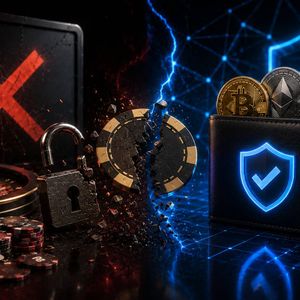
What Happens When a Web3 Casino Won't Pay? Licensing vs Self-Custody in 2026
Bitzo
2 hours ago
REGULATION|CRYPTOCURRENCY|SECURITY INCIDENTS
Related Articles
MARKET|TRADING|OP|STRK|CRYPTOCURRENCY
Starknet (STRK): Cairo‑Native zk Rollup, Lyra (LYRA): Option...
Read More
EXCHANGE|SOL|TRADING|USDC|CRYPTOCURRENCY
Best Crypto Wallets for WalletConnect Pay Checkouts in 2026
Read More
BUSINESS|MARKET|REGULATION|RESEARCH|CRYPTOCURRENCY
The First Paragraph Problem: Why AI Ignores Most Crypto Cove...
Read MoreMarket Overview

BTC
Bitcoin
$64450.68
+0.54%

ETH
Ethereum
$1672.17
-0.44%

USDT
Tether
$0.9990
-0.04%

BNB
BNB
$611.21
+0.46%

USDC
USDC
$0.9994
-0.04%