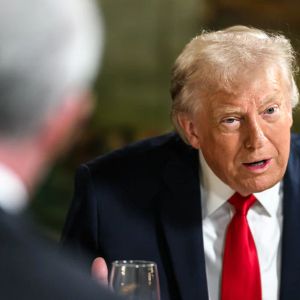
A federal judge has ruled that the Trump administration broke the law by freezing $5 billion meant for electric vehicle charging stations. The money was approved by Congress in 2021 to help states build EV infrastructure. But in February 2026, after Sean Duffy took over as Transportation Secretary, the Department of Transportation shut down access to the funds without going through proper legal steps. That triggered a lawsuit from 20 Democratic-led states and Washington D.C. The case was heard in Seattle by U.S. District Judge Tana Lin. Lin said the DOT and Federal Highway Administration “yanked the NEVI Formula Program’s cord out of the outlet” without following the rules laid out in administrative law. Judge issues permanent order against transportation department The judge didn’t just scold them. She issued a permanent order stopping the Transportation Department from taking back funds or canceling plans already approved. That means states can move ahead with the projects they planned, using money Congress already gave them. Environmental groups like the Sierra Club were happy with the ruling. So were the states. Mike Faulk, who speaks for Washington Attorney General Nick Brown, said, “Judge Lin’s order is a resounding win for the rule of law and for smart investment in our clean energy future.” The $5 billion program was part of the Infrastructure Investment and Jobs Act, signed by Biden in 2021. It’s called the NEVI program and was set up to help states build a national network of EV chargers. States like California, Colorado, and Washington had already made their plans and were awarded the funds. But as soon as Duffy took office under President Donald Trump, the DOT suddenly stopped the money from flowing. The Trump administration claimed it was just a temporary pause. But that pause came without any legal process. Lin didn’t buy the excuse. She said the law didn’t allow for any kind of pause, even a short one. “In short, Defendants defied the will of Congress by withholding funds in a manner not contemplated by the IIJA,” she wrote. That earlier pause had already drawn fire from the court. A preliminary injunction forced the DOT to issue new guidance. Still, by then, a lot of damage had already been done. Projects were delayed. States were left hanging. Now the case is likely to cause more fights in Congress. The Senate is expected next week to take up a bill that would shift $879 million, money meant for EV charging, to other kinds of infrastructure. That bill already passed the House. If it passes the Senate too, some of the EV money could be rerouted despite the court’s ruling. The Trump administration has also been rolling out other steps to push gas-powered cars over electric ones. It’s been cutting EV tax breaks for buyers and backing automakers that focus on fuel engines. This court ruling won’t stop that. But it does mean the government can’t mess with state funding that was already approved. The smartest crypto minds already read our newsletter. Want in? Join them .
LIVE
BTC
$89561.83
+0.11%
ETH
$2955.85
+0.33%
USDT
$0.9987
-0.02%
BNB
$891.29
+0.12%
XRP
$1.92
+0.30%
USDC
$0.9999
+0.00%
A federal judge rules Trump’s DOT illegally froze $5B in EV charger funds
Cryptopolitan
1 hour ago
DOT|REGULATION|CRYPTOCURRENCY
Related Articles
BUSINESS|DOGE|MARKET|TRADING|CRYPTOCURRENCY
Can Any New Crypto Repeat What Dogecoin Did in Its Prime? He...
Read More
ASIA|BUSINESS|MARKET|TRADING|CRYPTOCURRENCY
Vertical Aerospace displays its electric flying taxi in New ...
Read More
BUSINESS|REGULATION|TECHNOLOGY|TRADING|RESEARCH
Business leaders at Davos warned AI could trigger mass job l...
Read MoreMarket Overview

BTC
Bitcoin
$89561.83
+0.11%

ETH
Ethereum
$2955.85
+0.33%

USDT
Tether
$0.9987
-0.02%

BNB
BNB
$891.29
+0.12%

XRP
XRP
$1.92
+0.30%