A British aviation company brought its electric flying taxi to New York City this week, showing off a vehicle designed to one day carry regular commuters to airports and other nearby destinations at prices the company claims will be comparable to premium ride-sharing services. Vertical Aerospace, based in the United Kingdom, displayed its Valo aircraft in Manhattan. The company’s chairman, Dómhnal Slattery, says these flying vehicles are intended to expand beyond wealthy travelers who can afford expensive helicopter rides. Aiming for affordable air travel with electric power “This is not for the affluent, or the super affluent, which is where helicopters have been forever. We want to democratize urban air mobility,” Slattery told Yahoo Finance. The Valo aircraft has a wingspan of nearly 50 feet and can carry up to six passengers along with a pilot and their bags. That makes it bigger than other flying taxis currently under development by competing companies. The aircraft runs entirely on electricity and has eight rotors that let i t ta ke off straight up like a helicopter. Once airborne, four propellers in the front spin 90 degrees to push the vehicle forward for regular flight. According to the company, the electric motors make much less noise than traditional helicopters. Vertical Aerospace designed the Valo for trips of 100 miles or less. The company expects the aircraft to make several short flights between charges rather than one long journey. Slattery said the company aims to charge around the same price as an Uber Black service for each seat when the cabin is set up for six people. “That opens up the mass market,” he explained. Right now, an Uber Black ride from downtown Manhattan to John F. Kennedy International Airport costs about $150, though prices can go higher during busy times. Slattery maintains that running on electricity instead of fuel makes the Valo cheaper to operate than regular helicopters. Traditional helicopters create noise and air pollution, need repairs more often, and require more room to take off and land. The aircraft shown in New York will soon begin the approval process with European aviation officials. Slattery says European rules are tougher than those from the Federal Aviation Administration in the United States. “What we’re revealing tonight is the certificatio n ai rplane; this is what you’re physically seeing out there,” Slattery said about the displayed vehicle. He sai d th e approval process will start next year. Getting approved requires provin g th e aircraft is safe and reliable . Slattery, who spent years working in the aircraft leasing business, say s pa ssengers also need to feel confident about flying in these vehicles. “We want to really sho w th ese things are safe; I need to convince people that this becomes as safe as a Boeing 737, because commercial aviation is the safest form of transport in the world,” Slattery said. “W e al l have worked hard in the industry to achieve that (safety) metric. And so in this industry, proving safety and showing safety is what will make the difference over the next decade.” Airline partnerships and route planning underway Vertical Aerospace has partnered with American Airlines and Japan Airlines. The company hopes to receive full certification by 2028 and begin operating flights that year. However, the company won’t actually run the passenger services. Instead, it plans to operate as a manufacturer like Boeing or Airbus, building aircraft that airlines and other operators will use to serve customers. The company plans to offer flying taxi services in London. In the New York area, Vertical Aerospace is working with Bristow Group , a major helicopter transportation company, and Skyports Infrastructure, which runs heliports around New York City. Together, they’re planning routes that would connect New York City to Newark and Teterboro airports in New Jersey, as well as JFK and East Hampton Airport. Some companies already provide helicopter airport transfers. Blade, which Joby Aviation owns, currently uses regular helicopters but plans to switch to its own electric aircraft eventually. Competition among flying taxi companies will be fierce, and Vertical Aerospace is betting that the Valo’s size, speed, and distance capabilities will provide a competitive edge. If you're reading this, you’re already ahead. Stay there with our newsletter .
LIVE
BTC
$89561.83
+0.11%
ETH
$2955.85
+0.33%
USDT
$0.9987
-0.02%
BNB
$891.29
+0.12%
XRP
$1.92
+0.30%
USDC
$0.9999
+0.00%
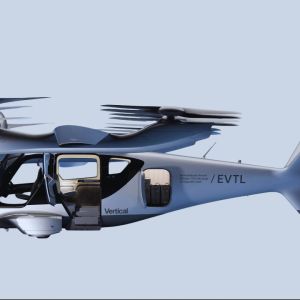
Vertical Aerospace displays its electric flying taxi in New York, carrying six passengers
Cryptopolitan
2 hours ago
ASIA|BUSINESS|MARKET|TRADING|CRYPTOCURRENCY
Related Articles

DOT|REGULATION|CRYPTOCURRENCY
A federal judge rules Trump’s DOT illegally froze $5B in EV ...
Read More
BUSINESS|DOGE|MARKET|TRADING|CRYPTOCURRENCY
Can Any New Crypto Repeat What Dogecoin Did in Its Prime? He...
Read More
BUSINESS|REGULATION|TECHNOLOGY|TRADING|RESEARCH
Business leaders at Davos warned AI could trigger mass job l...
Read MoreMarket Overview

BTC
Bitcoin
$89561.83
+0.11%

ETH
Ethereum
$2955.85
+0.33%

USDT
Tether
$0.9987
-0.02%

BNB
BNB
$891.29
+0.12%

XRP
XRP
$1.92
+0.30%